Cardiovascular Health Exercises for Beginners
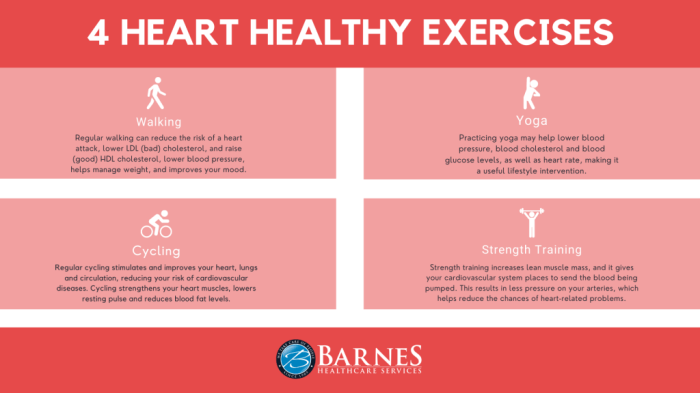
Regular cardiovascular exercises are essential for maintaining overall health and well-being. These exercises help improve heart health, increase lung capacity, boost metabolism, and enhance endurance. For beginners, starting with low-impact exercises is crucial to prevent injury and build stamina gradually.
Examples of Low-Impact Exercises
- Brisk walking: A simple yet effective way to get your heart rate up without putting too much stress on your joints.
- Swimming: A full-body workout that is gentle on the joints and can improve cardiovascular fitness.
- Cycling: Riding a bike is a low-impact exercise that can be easily adjusted to suit your fitness level.
- Dancing: Fun and engaging, dancing can help increase heart rate and improve cardiovascular health.
Recommended Frequency and Duration
Cardiovascular health exercises for beginners – For beginners, it is recommended to start with 30 minutes of cardiovascular exercise most days of the week. As you build endurance and strength, you can gradually increase the duration and intensity of your workouts. It is important to listen to your body and rest when needed to avoid overtraining and injuries.
Healthy Habits
Regular exercise is essential for maintaining overall health and well-being. When incorporated into a daily routine, exercise can have numerous positive impacts on cardiovascular health, weight management, and mental well-being. It helps improve blood circulation, strengthens the heart muscle, and reduces the risk of chronic diseases such as heart disease, diabetes, and obesity.
Staying Motivated
- Set realistic goals: Start with achievable goals and gradually increase the intensity or duration of your workouts.
- Find a workout buddy: Exercising with a friend can provide motivation, support, and accountability.
- Reward yourself: Celebrate your progress with non-food rewards to stay motivated and on track.
- Track your progress: Keep a workout log or use fitness apps to monitor your improvements and stay motivated.
Hydration and Nutrition
Maintaining proper hydration and nutrition is crucial for supporting your exercise routine and overall health. Staying hydrated helps regulate body temperature, lubricate joints, and transport nutrients throughout the body. A well-balanced diet rich in fruits, vegetables, lean proteins, and whole grains provides the necessary nutrients to fuel your workouts and promote recovery.
Emotional Wellbeing
Regular cardiovascular exercise not only benefits physical health but also plays a crucial role in improving emotional wellbeing. The connection between cardiovascular workouts and mental health is significant, as exercise can help reduce stress, anxiety, and depression while enhancing mood and overall emotional state.
Impact of Cardiovascular Workouts on Emotional Wellbeing
- Cardiovascular exercises, such as running, cycling, or swimming, stimulate the release of endorphins in the brain, often referred to as “feel-good” hormones. These endorphins act as natural painkillers and mood elevators, helping to reduce stress and improve emotional state.
- Regular participation in cardiovascular activities can lead to better sleep patterns, increased self-esteem, and a sense of accomplishment, all of which contribute to a positive emotional outlook.
- Engaging in cardiovascular workouts can provide a healthy outlet for managing emotions and coping with daily stressors, leading to a more balanced and resilient emotional state over time.
Healthy Aging
Regular cardiovascular exercises play a crucial role in promoting healthy aging by maintaining the overall health and function of the heart and blood vessels.
Examples of Exercises for Healthy Aging
Regular aerobic exercises such as brisk walking, swimming, cycling, and dancing can help individuals maintain cardiovascular health as they age. These activities help improve heart function, circulation, and overall cardiovascular fitness.
Preventing Age-Related Cardiovascular Issues
Engaging in regular physical activity can help prevent age-related cardiovascular issues such as heart disease, high blood pressure, and stroke. Exercise helps to strengthen the heart muscle, improve blood flow, and reduce the risk of developing these conditions as individuals grow older.
Active Lifestyle
Incorporating cardiovascular exercises into an active lifestyle offers numerous benefits for overall health and well-being. These exercises can significantly enhance energy levels, improve cardiovascular health, and contribute to a higher quality of life.
Benefits of Cardiovascular Exercises in an Active Lifestyle
- Improved heart health: Cardiovascular exercises help strengthen the heart muscle, improve circulation, and reduce the risk of heart disease.
- Increased energy levels: Regular physical activity boosts energy levels by enhancing overall stamina and reducing feelings of fatigue.
- Weight management: Cardio exercises aid in burning calories, which can help maintain a healthy weight and reduce the risk of obesity-related conditions.
- Enhanced mood: Physical activity releases endorphins, which can improve mood and reduce symptoms of anxiety and depression.
- Better sleep quality: Regular exercise can promote better sleep patterns, leading to improved rest and overall well-being.
Healthy Recipes
When it comes to supporting your cardiovascular health goals, incorporating nutrient-rich recipes into your meal planning is essential. A balanced diet, combined with regular exercise, can have a significant impact on your overall health and wellbeing.
Nutrient-Rich Breakfast Options
- Start your day with a bowl of oatmeal topped with fresh berries and a sprinkle of chia seeds for a dose of fiber, antioxidants, and omega-3 fatty acids.
- Whip up a smoothie using spinach, banana, Greek yogurt, and almond butter for a protein-packed and vitamin-rich breakfast on the go.
Heart-Healthy Lunch Ideas
- Prepare a quinoa salad with mixed vegetables, grilled chicken, and a lemon vinaigrette dressing for a satisfying and nutritious midday meal.
- Enjoy a tuna salad sandwich on whole grain bread with avocado slices and a side of cherry tomatoes for a boost of omega-3 fatty acids and heart-healthy fats.
Nutrient-Dense Dinner Choices
- Bake salmon with a honey mustard glaze and serve it alongside roasted sweet potatoes and steamed broccoli for a dinner rich in omega-3s, vitamins, and minerals.
- Try a vegetable stir-fry with tofu, bell peppers, snap peas, and a soy ginger sauce over brown rice for a plant-based meal packed with protein and fiber.
Mental Resilience
Regular cardiovascular exercise not only benefits physical health but also plays a crucial role in improving mental resilience. The impact of exercise on cognitive function and brain health is significant, leading to enhanced overall wellbeing. Incorporating mindfulness practices with cardiovascular workouts can further boost mental resilience and promote a positive mindset.
Improved Cognitive Function
Regular cardiovascular exercise has been shown to improve cognitive function by increasing blood flow to the brain, promoting the growth of new brain cells, and enhancing neural connections. This can lead to better memory, concentration, and overall cognitive performance.
Brain Health Benefits
Engaging in cardiovascular exercises can also protect brain health by reducing the risk of cognitive decline and neurodegenerative diseases such as Alzheimer’s. The release of endorphins during exercise can improve mood, reduce stress, and contribute to a sense of overall well-being.
Mindfulness Practices Integration
Integrating mindfulness practices such as deep breathing, meditation, or yoga into cardiovascular workouts can help individuals focus on the present moment, reduce anxiety, and enhance mental clarity. By combining physical activity with mindfulness, individuals can cultivate a more resilient mindset and better cope with life’s challenges.
Immune Support
Regular exercise and cardiovascular health play a crucial role in supporting a strong immune system. By engaging in cardiovascular workouts, individuals can enhance their body’s ability to fight off infections and illnesses. Let’s explore the link between cardiovascular health and immunity.
Boosting Immunity Through Regular Exercise
Regular physical activity, such as cardiovascular exercises like running, swimming, or cycling, can help boost the immune system by increasing circulation and promoting the production of white blood cells. These cells play a vital role in fighting off pathogens and keeping the body healthy. Additionally, exercise can reduce inflammation in the body, which is linked to many chronic diseases.
- Cardiovascular workouts stimulate the immune system, making it more efficient in identifying and neutralizing harmful invaders.
- Regular exercise can reduce the risk of chronic diseases like heart disease, diabetes, and obesity, which can weaken the immune system over time.
- Physical activity can also help reduce stress levels, which can have a positive impact on immune function.
Stress Relief
Regular cardiovascular exercises play a crucial role in stress relief by helping to reduce the levels of stress hormones in the body and promoting the release of endorphins, which are natural mood lifters.
Using Exercise to Manage Stress
Regular physical activity can be a powerful tool in managing stress effectively. Here are some techniques on how to use exercise to reduce stress:
- Engage in aerobic exercises such as running, cycling, or swimming, as they can help release tension and improve mood.
- Practice mindfulness while exercising by focusing on your breath and body movements to help calm the mind.
- Try incorporating strength training exercises to build resilience and boost confidence, which can help in coping with stress.
Physiological Benefits of Exercise on Stress Reduction, Cardiovascular health exercises for beginners
Regular cardiovascular exercises not only help in reducing stress but also provide several physiological benefits that contribute to overall mental well-being:
- Improved blood circulation helps deliver more oxygen to the brain, enhancing cognitive function and reducing stress.
- Exercise stimulates the production of endorphins, which act as natural painkillers and mood elevators, aiding in stress reduction.
- Physical activity can improve sleep quality, which is essential for stress management and overall mental health.
Nutritional Balance: Cardiovascular Health Exercises For Beginners
Maintaining a balanced diet is crucial when incorporating cardiovascular exercises into your routine. A proper nutritional balance provides the necessary fuel and nutrients to support your overall health and maximize the benefits of your workout.
Key Nutrients for Cardiovascular Health
- Eat foods rich in Omega-3 fatty acids, such as salmon, walnuts, and flaxseeds, to support heart health and reduce inflammation.
- Incorporate fiber-rich foods like whole grains, fruits, and vegetables to help lower cholesterol levels and improve digestion.
- Include potassium-rich foods like bananas, sweet potatoes, and spinach to regulate blood pressure and support heart function.
- Opt for lean sources of protein such as poultry, fish, tofu, and legumes to maintain muscle mass and promote heart health.
Significance of Hydration and Proper Nutrition
Proper hydration is essential for cardiovascular health as it helps maintain blood volume and circulation during exercise. Pairing cardiovascular workouts with adequate water intake and a well-balanced diet ensures that your body is properly fueled and hydrated, maximizing the benefits of your exercise routine.
Detailed FAQs
What are some examples of low-impact exercises suitable for beginners?
Some examples include brisk walking, cycling, swimming, and using an elliptical machine.
How often should beginners do cardiovascular workouts?
It is recommended for beginners to aim for at least 150 minutes of moderate-intensity cardio each week, spread out over several days.
How can cardiovascular exercises help with stress relief?
Cardio workouts release endorphins, which are natural mood lifters, helping to reduce stress and improve overall mood.


More Stories
Boost Immunity Naturally: Best Practices for 2024
Stay Hydrated This Summer: Waters Importance
How Dehydration Impacts Energy and Daily Hydrations Importance